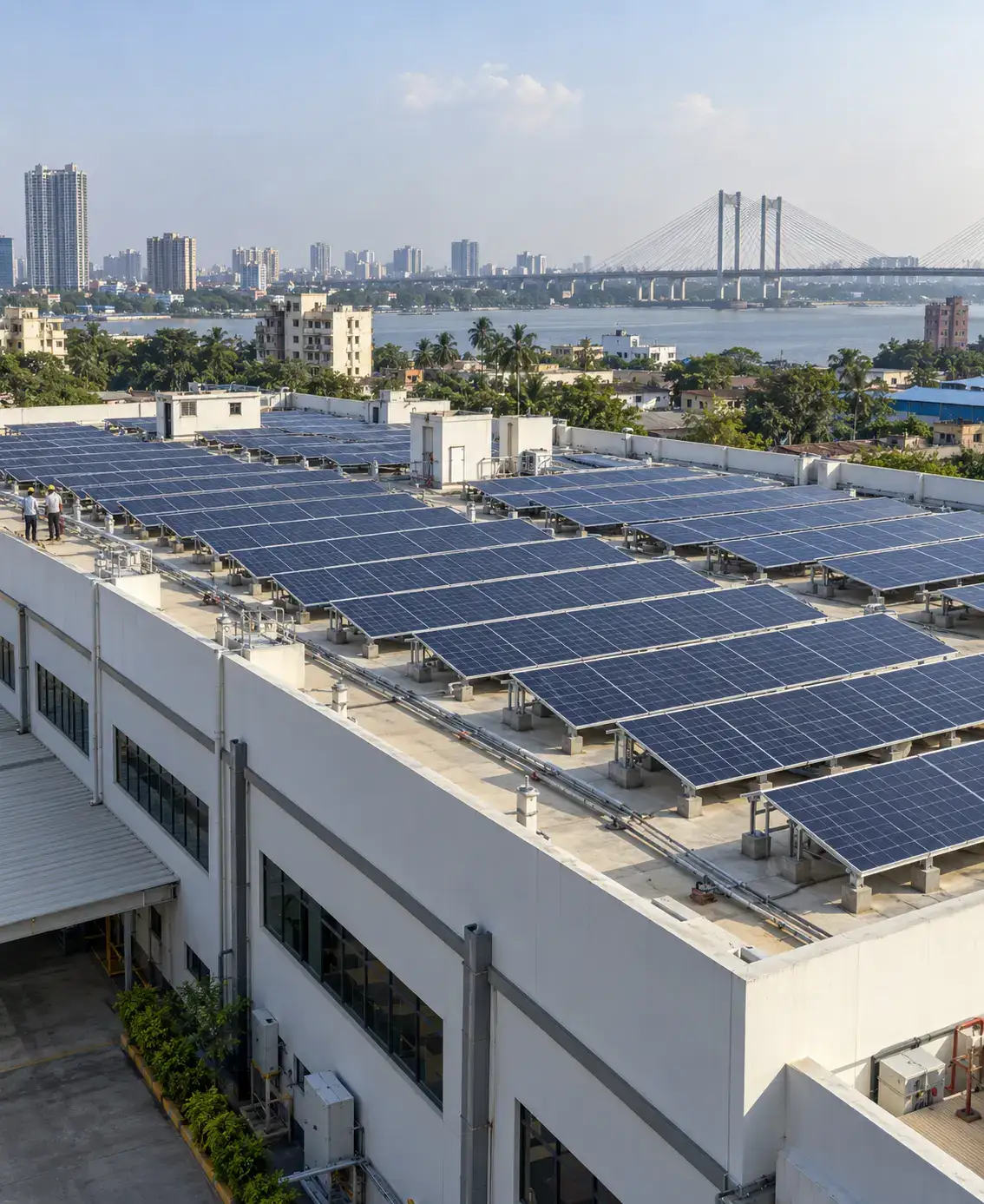
Rooftop Solar for Your Working Day.
For offices, shops, schools, hospitals, hotels, housing societies, warehouses and small industrial units.
Why Operating Hours Matter
A commercial system's economics depend on how much of what it generates you can actually use as you generate it. A business that runs mostly during daylight hours gets a different result from one that's quiet by day and busy at night.
Illustrative, generic pattern — your own operating hours are reviewed against sunlight hours during assessment, not assumed.
Sizing Against Your Roof
Commercial roofs often carry 10 kW and above. Try a larger size to get a feel for the area involved — real layouts also need to route around plant rooms, tanks and AC units.
18 panels illustrated, assuming a 550 Wp panel
18
Illustrative panel count
700–1,100
Sq ft of roof, illustrative
Common for a larger home or small business
Illustrative only — actual panel count, layout and roof area depend on your specific panel model, roof shape and shading, confirmed at site assessment.
What Commercial Planning Actually Covers
- Roof-area assessment, including existing rooftop equipment and structural checks
- System sizing referenced against your operating-hours load pattern
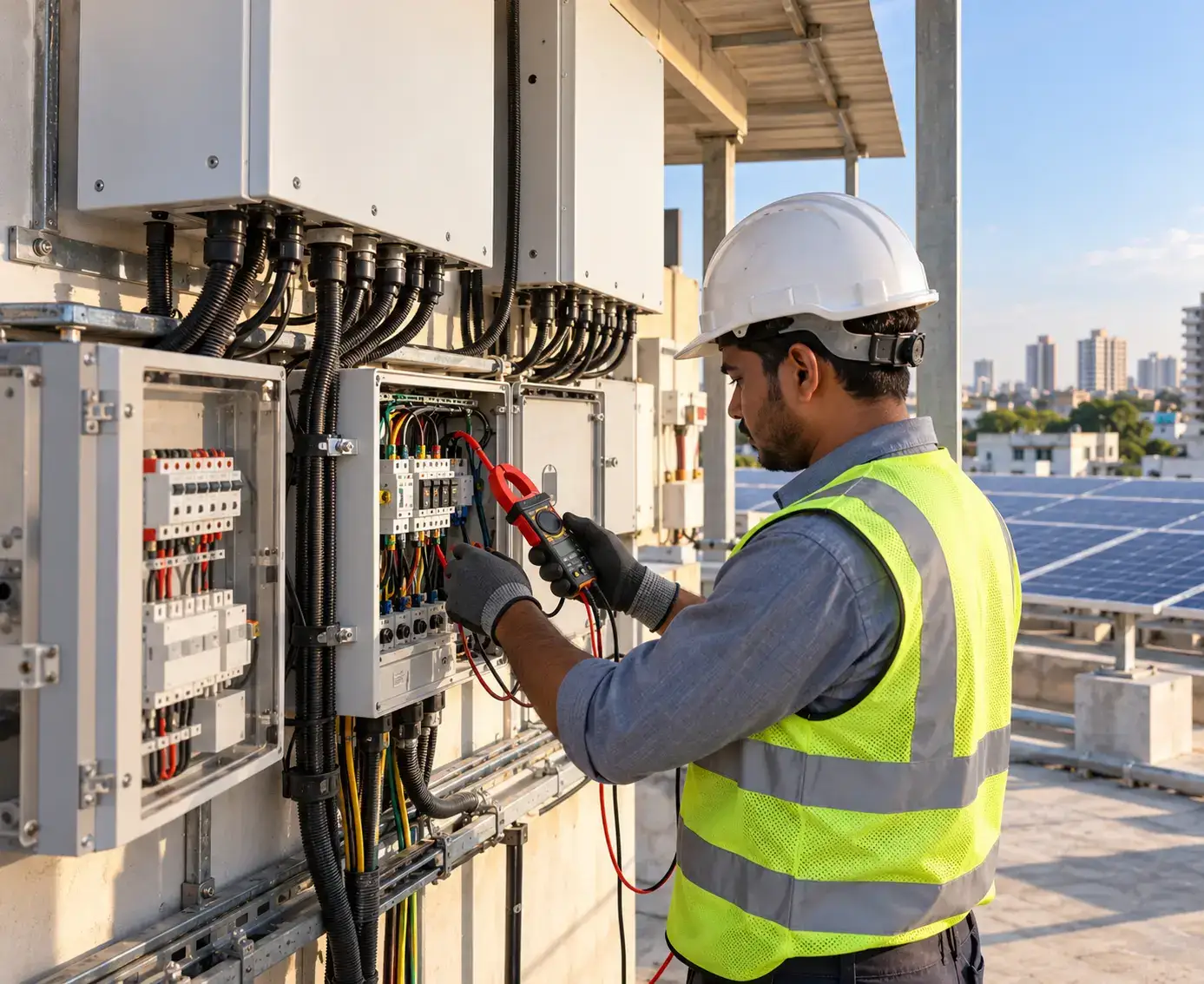
- Implementation planning around shutdown windows and tenant or staff disruption
- Monitoring and maintenance approach appropriate to a commercial site
- Project workflow from proposal through commissioning — see our full process
Commercial & SME Questions
How much roof space do I need?
It depends on system size and roof type. Flat RCC roofs generally need more area per kW than a metal shed roof, because tilted mounting on a flat roof needs row-to-row spacing to avoid shading. Our solar calculator gives an indicative area range from your inputs — the exact figure is confirmed at site assessment.
How do I know what system size I need?
Start from your electricity consumption (your bill is a reasonable proxy), then check it against available roof area and how your usage is spread through the day. Our quick estimator gives a starting range; the confirmed size comes from reviewing your actual bill, connection type and roof during assessment.
Are government incentives available?
Rooftop solar incentive schemes exist at the central level, and some states add their own. Because scheme terms, eligible capacity and amounts change and depend on your specific situation, we don't quote figures upfront — we point you to the current official sources and confirm what applies during your assessment.
How long does installation take?
It varies with system size, roof condition, and how quickly approvals and material delivery move — all things confirmed once a specific project is proposed. We'd rather give you a real, project-specific timeline after assessment than a generic number that may not hold for your site.
Can I finance a solar system?
Loan and financing options for rooftop solar are offered by various banks and NBFCs, sometimes linked to government schemes. Terms, interest rates and eligibility are set by the lender, not by us — we can point you toward the current options relevant to your case during assessment.
Can I monitor how much power my system generates?
Most modern inverters include a monitoring app or dashboard showing generation data. Exactly what's available depends on the inverter brand specified in your system design, which is confirmed at the proposal stage.
Will installation disrupt business operations?
Rooftop mounting and wiring work is generally planned to avoid interrupting your core operating hours wherever possible, with any required shutdown windows (for tie-ins to your electrical panel) scheduled and communicated in advance as part of installation planning.
Request a Commercial Assessment
Tell us the basics and we'll get in touch to schedule a load and roof review for your site.