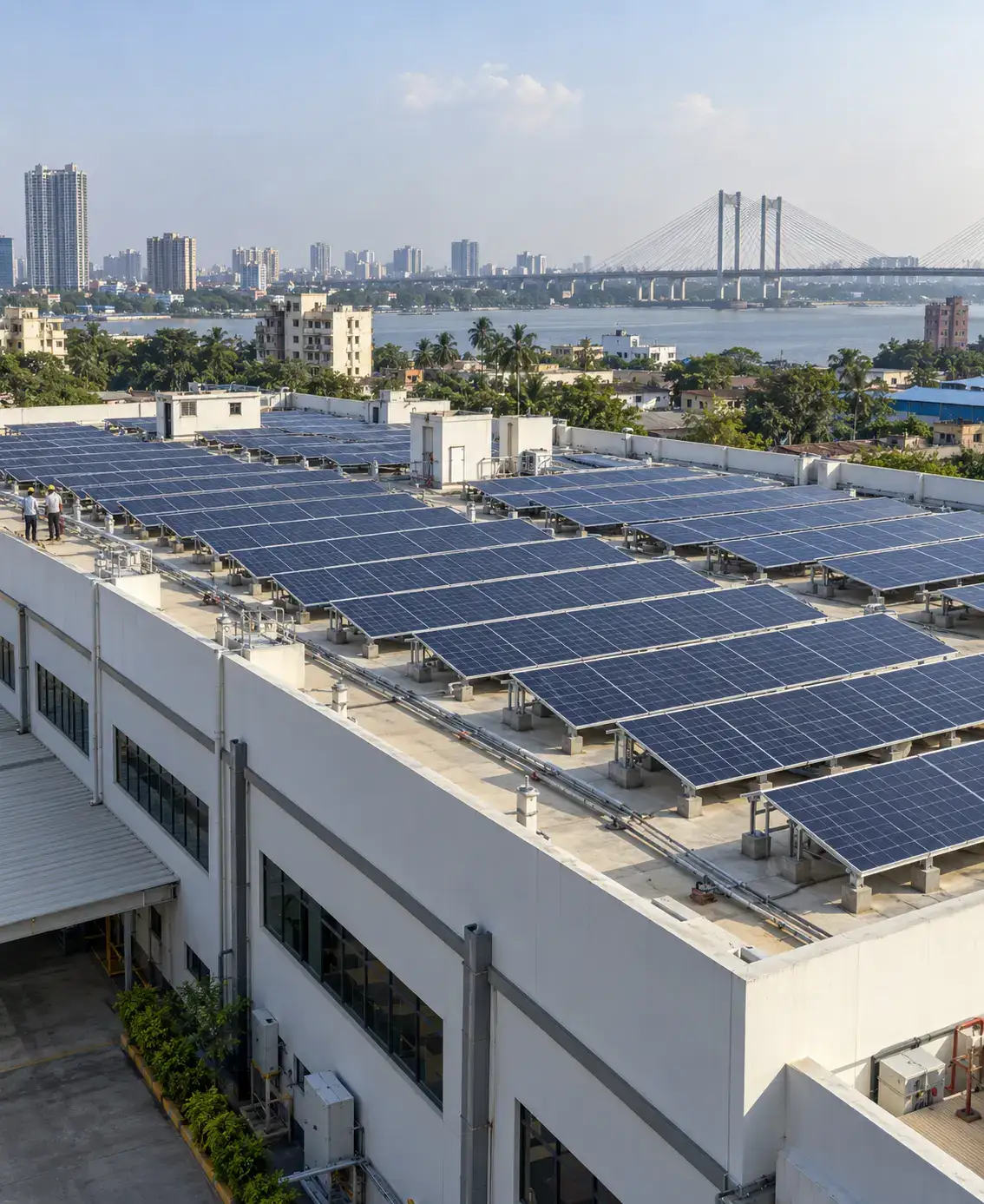
Solar panels across a large urban rooftop in warm evening light
Rooftop Solar · West Bengal

Solar that fits
your roof.

Rooftop solar for homes and businesses in Kolkata, Howrah and surrounding West Bengal. Planned around your electricity use, roof and daily routine.

No sales commitment · Initial assessment only

01 · Assess the roof02 · Review your usage03 · Plan the system
Homes · Apartments · Housing Societies

Residential Solar

Rooftop solar sized around your household's actual electricity use.

Explore Residential
Offices · Retail · Schools · Warehouses · SMEs

Business Solar

Turn unused rooftop area into planned, monitored energy infrastructure.

Explore Business Solar

What Could Fit Your Roof?

Answer three quick questions for an indicative sense of system size — no engineering visit required yet.

1. Your approximate monthly electricity bill
2. Property type
3. Roof type

Answer the three questions above to see an indicative system size range for your property.

Assessment before advice

Solar Is Easy to Sell. A Good Decision Is Harder.

The questions that actually matter before you commit to a system.

01How much solar can my roof support?

It comes down to usable roof area, shading from nearby structures or trees, and roof type. A flat RCC roof and a metal shed roof carry different amounts of panel capacity for the same footprint — this is one of the first things we check at assessment.

02What system size actually fits my usage?

Bigger isn't automatically better. We size a system against your actual electricity consumption and how it's spread through the day, so you're not paying for capacity you can't use or under-sizing for what you actually need.

03What does installation involve?

Roof mounting, wiring back to your electrical panel, an inverter, and coordination with your DISCOM for the net-metering connection. Most of this is scheduled around your routine, with any required shutdown windows planned in advance.

04How do I know the economics make sense?

That depends on your consumption pattern, tariff, upfront budget and how long you plan to hold the property — inputs that are specific to you, not a generic number. We work through this with you at the proposal stage rather than quoting a one-size figure upfront.

Confused About Subsidy, Net Metering or Paperwork?

Solar incentives, vendor requirements and electricity-board procedures can change. HelioNest helps customers understand the applicable process during project assessment — we don't quote subsidy figures upfront because they depend on your state, DISCOM and system size at the time you apply.

Eligibility and government incentives are subject to applicable current rules. Verify current terms through official government sources.

Ask About the Current Process

HelioNest Solar is a fictional demonstration brand and is not affiliated with, endorsed by, or empanelled under any government body. Links above point to genuine official resources for your own reference.

What a HelioNest Project Could Look Like

Illustrative portfolio concepts — not completed installations. Real project case studies will replace these once available.

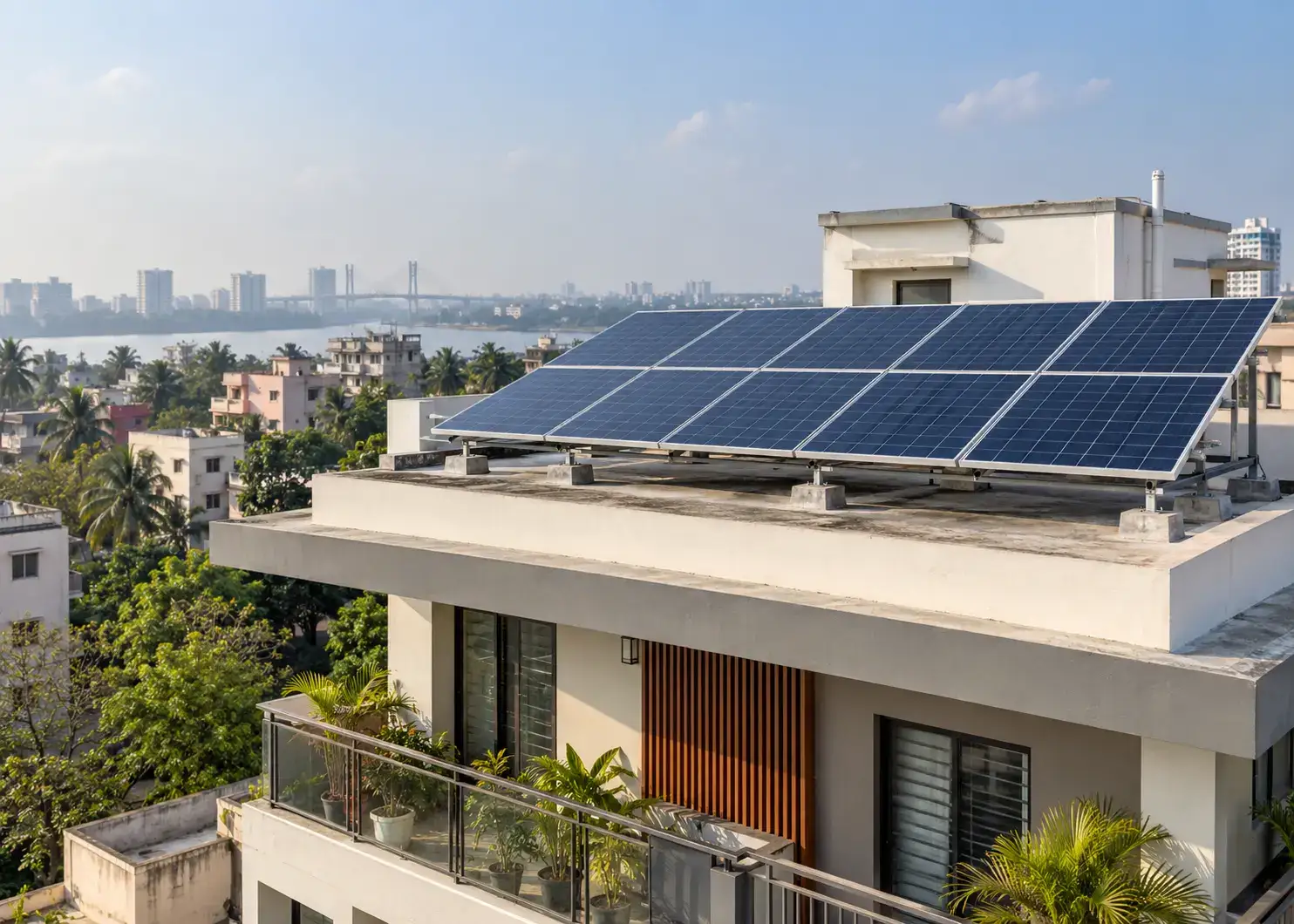
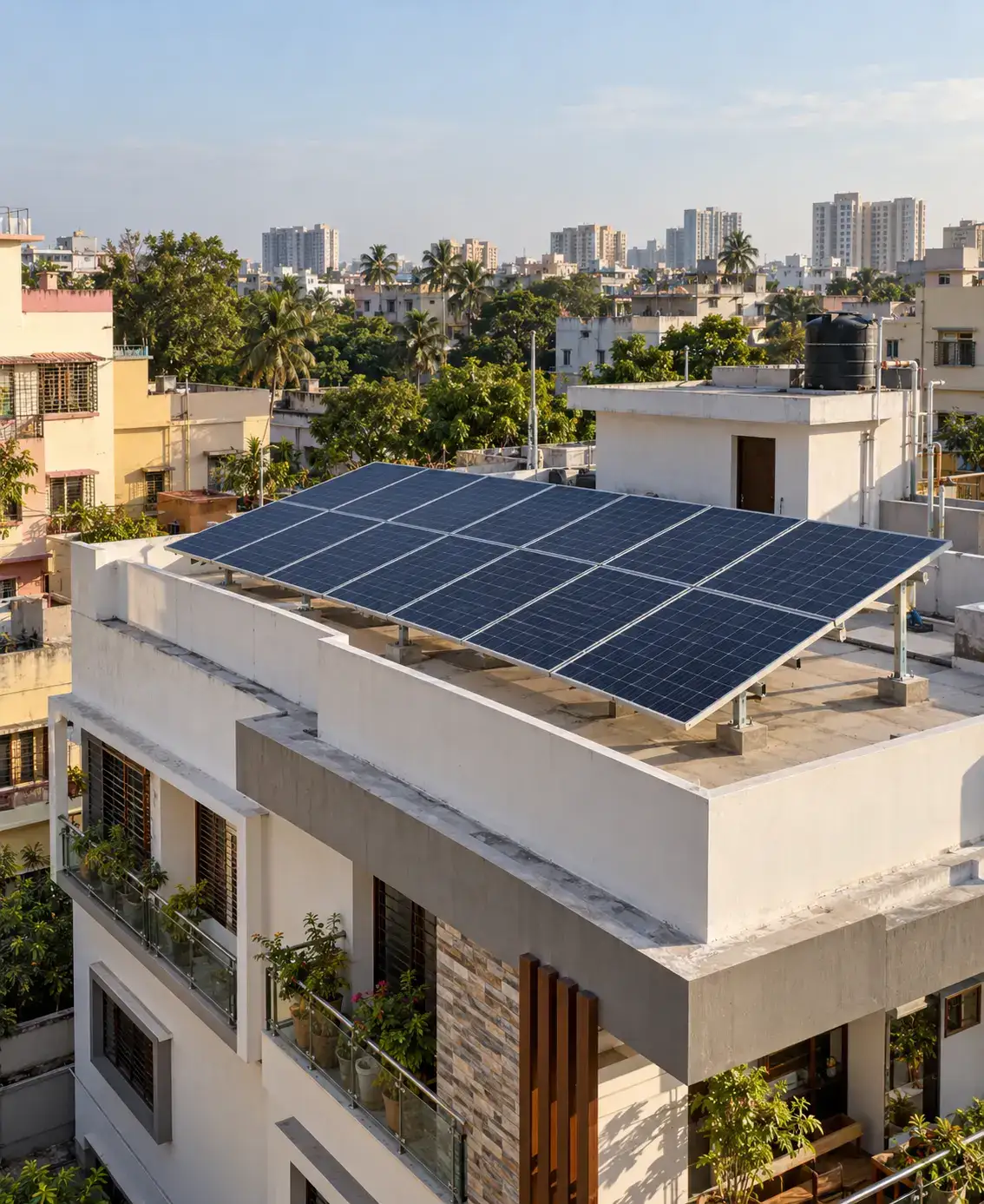
Rooftop solar panels above a home with a planted balcony and city views
Portfolio concept — illustrative project

Concept Installation 01

Residential Rooftop

Independent house, flat RCC roof

Reduce a household's grid dependence within a modest, fixed roof footprint, while keeping walkways clear for water-tank and maintenance access.

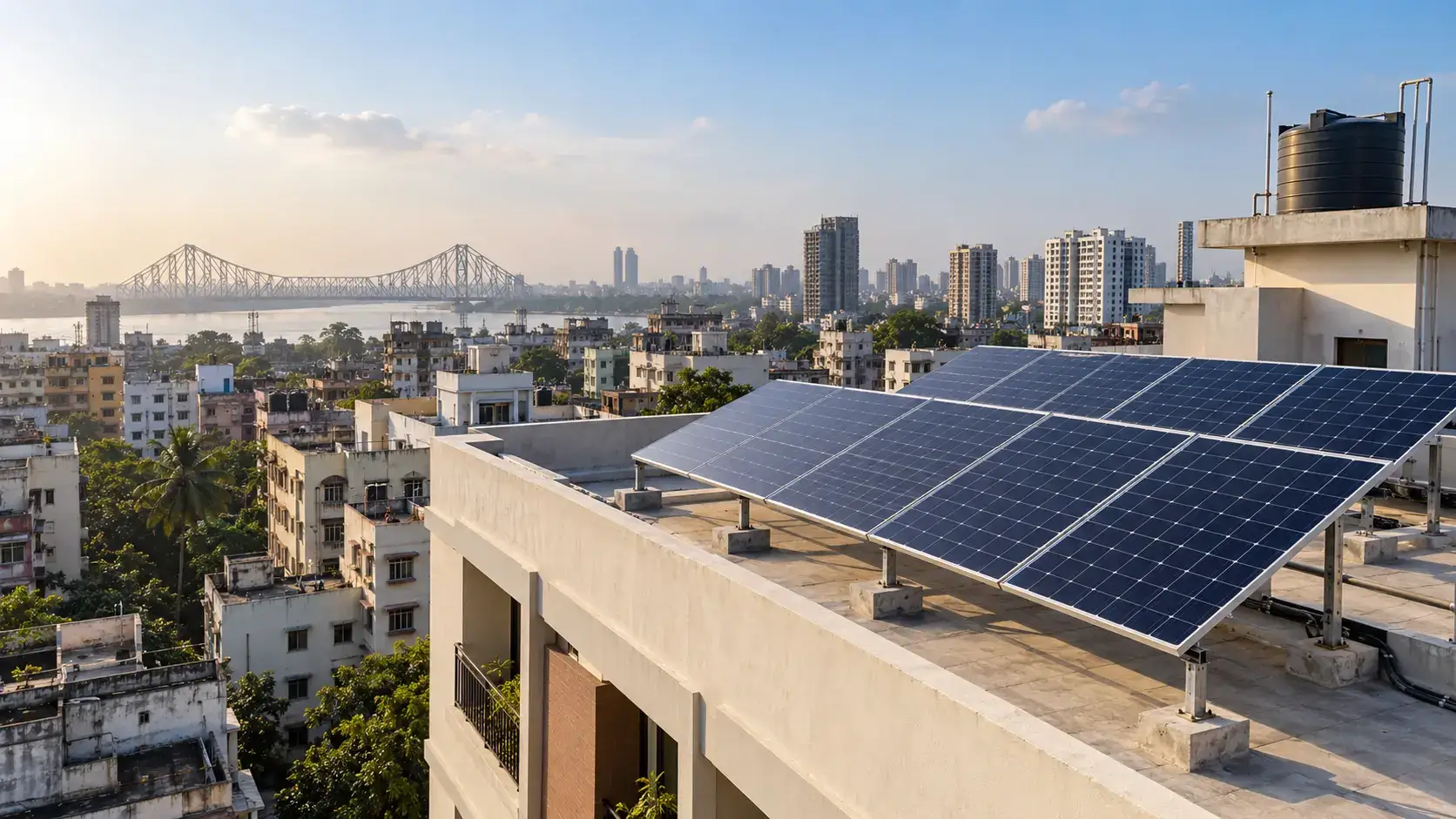
A large rooftop solar array with a river and city skyline in the background
Portfolio concept — illustrative project

Concept Installation 02

Commercial Facility

Office / retail building, mixed daytime load

Fit panel capacity around existing rooftop equipment (AC condensers, water tanks, lift rooms) while matching generation to daytime operating hours.

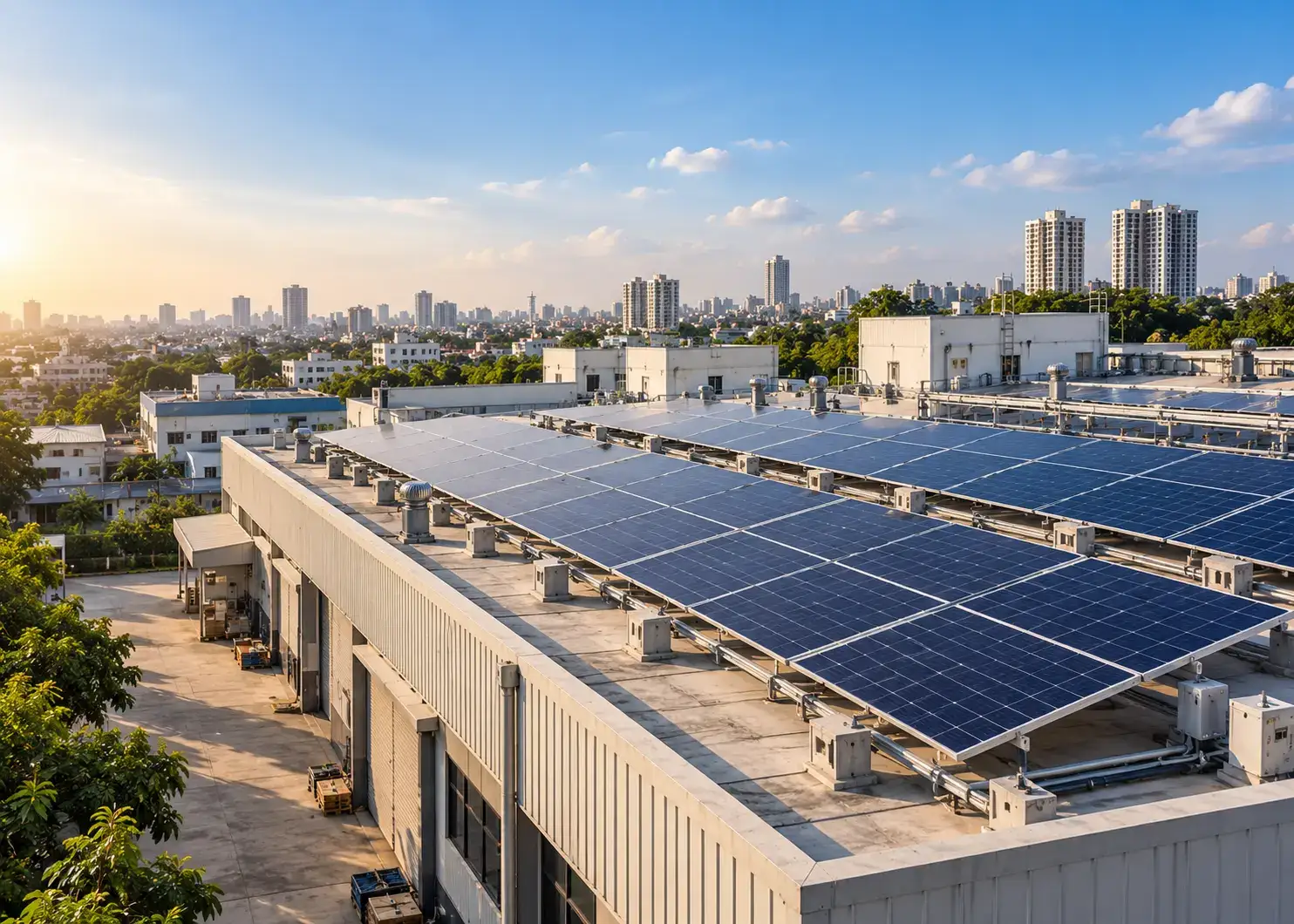
Illustrative concept diagram of an industrial shed rooftop with solar panels following the existing metal roof slope
Portfolio concept — illustrative project

Concept Installation 03

Industrial Shed

Metal shed roof, single-storey facility

Use the existing shed slope for mounting efficiency, sized against a facility's daytime shift-hour electricity use.

Explore the planning concepts →

A Transparent Process

Six stages, from a first conversation to handover — no fixed timeline promised upfront.

01

Initial conversation

A short call or WhatsApp exchange to understand your property, your electricity bill and what you're trying to solve.

02

Electricity + roof review

We look at your recent bills and available roof photos or plans to form an early view of feasibility and rough system size.

03

Site assessment

A physical visit to check roof condition, structure, shading, electrical panel and access — the step that turns estimates into an actual design.

04

System proposal

A concrete proposal: system size, equipment, layout, indicative cost and what the net-metering process looks like for your address.

05

Installation planning

Scheduling, material readiness and any required documentation are lined up before work begins on your roof.

06

Commissioning & handover

The system is tested, connected, and you're walked through monitoring and basic upkeep before we sign off.

See what happens at each stage →

Straight Answers to Common Questions

Where an answer genuinely depends on your state, DISCOM or building, we say so.

Will solar work during a power cut?

Not by default. Standard grid-tied solar systems are required to switch off automatically during a grid outage, for the safety of linemen working on the network. If backup power during outages matters to you, that needs a hybrid inverter and battery, which is a separate design decision with its own cost.

How much roof space do I need?

It depends on system size and roof type. Flat RCC roofs generally need more area per kW than a metal shed roof, because tilted mounting on a flat roof needs row-to-row spacing to avoid shading. Our solar calculator gives an indicative area range from your inputs — the exact figure is confirmed at site assessment.

How do I know what system size I need?

Start from your electricity consumption (your bill is a reasonable proxy), then check it against available roof area and how your usage is spread through the day. Our quick estimator gives a starting range; the confirmed size comes from reviewing your actual bill, connection type and roof during assessment.

Can solar work on an apartment building?

Often yes, but it needs a few extra conversations upfront: terrace access, resident or society approval, and how the building's electricity is metered (individual flats vs common areas). These vary by building and by DISCOM, so housing societies usually need a slightly longer assessment stage than a standalone home.

What happens during monsoon?

Rooftop systems are engineered for outdoor conditions year-round, with appropriate mounting, cable routing and earthing for monsoon weather. Heavy, sustained cloud cover will naturally reduce output on a given day, the way it reduces daylight generally, but the system keeps operating. Structural and drainage considerations for your specific roof are part of assessment.

What maintenance is required?

In general: periodic cleaning to clear dust and debris from panels, and occasional visual and electrical checks. How often depends on your local dust levels, roof access and the equipment installed. We set out a maintenance approach as part of the proposal, specific to your system.

Is a battery required?

No. Most residential and commercial rooftop systems in India are grid-tied without a battery — excess generation is exported to the grid and adjusted through net metering. A battery is an optional add-on if backup for specific loads during outages matters to you, and it changes both the cost and the system design.

How does net metering work?

A bidirectional meter records how much power you export to the grid and how much you import from it, and your bill is settled on the net figure over the billing cycle. The exact application steps, meter type and timelines are set by your local electricity distribution company (DISCOM) and can differ by state — we confirm what applies to your address during assessment.

Are government incentives available?

Rooftop solar incentive schemes exist at the central level, and some states add their own. Because scheme terms, eligible capacity and amounts change and depend on your specific situation, we don't quote figures upfront — we point you to the current official sources and confirm what applies during your assessment.

Do you handle the application process?

We help you understand the documentation and steps involved — electricity bill details, connection type, required forms — and prepare what's needed on your side. Approval and timelines are ultimately set by your DISCOM and the relevant scheme portal, not by us.
See the full FAQ

A residential rooftop solar array overlooking the city and a river bridge

Before You Buy Solar, Understand Your Roof.

Start with your electricity usage and property details. We'll show you what should be assessed next.

AssessmentWhatsApp